


LEAF SPRING
TOYOTA HILUX
Leaf springs for Toyota Hilux from 140 EUR • Popular articles always in stock, ready to ship.

TOYOTA HILUX
2015 ➞


TOYOTA HILUX
2005 - 2015


TOYOTA HILUX
1997 - 2005


TOYOTA HILUX
1985 - 1997

ONLINE INQUIRY
If you are not sure which of the many Toyota Hilux leaf springs fits your vehicle, please submit your inquiry online and we will email you a quotation. If you find our quotation suitable, your product is just a click away.

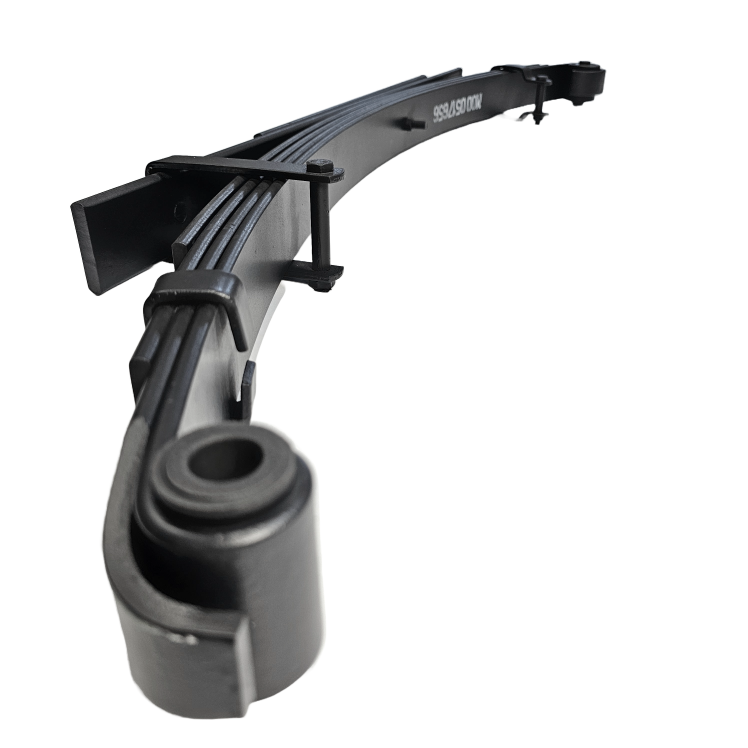


Toyota Hilux leaf spring: service guide for legendary reliability
Toyota's Hilux pickup has earned global reputation for exceptional durability and reliability since its 1968 introduction, becoming synonymous with indestructible engineering across diverse operational environments. Multiple Hilux generations remain in active European service—from robust seventh-generation models (2004-2015) through current eighth-generation trucks (2015-present)—all employing proven rear leaf spring suspension architecture. This design continuity reflects Toyota's confidence in traditional leaf spring technology delivering reliable load-bearing capability under extreme conditions ranging from Arctic exploration to desert mining operations. Available across European markets through Toyota's commercial vehicle network, the Hilux offers 1,000-1,200 kg payload capacity in Single Cab, Extra Cab, and Double Cab configurations. These versatile pickups serve equally demanding roles: construction site workhorses, agricultural utility vehicles, expedition platforms for overland adventure, and daily transportation for trades professionals. Rear leaf spring suspension provides the mechanical foundation enabling Hilux's legendary dependability under conditions that disable less robust competitors. For Hilux owners maintaining these exceptionally durable trucks across commercial, agricultural, recreational, and expedition applications, leaf spring condition represents a fundamental priority directly affecting load capability, off-road performance, chassis longevity, and the uncompromising reliability Toyota Hilux owners rightfully expect.
Critical leaf spring functions in Toyota Hilux suspension design
Toyota Hilux rear suspension architecture demonstrates engineering philosophy prioritizing simplicity, serviceability, and proven reliability over complex sophistication. Leaf spring assemblies accomplish two distinct yet interconnected responsibilities throughout extended operational life typical of these exceptionally durable trucks. Structurally, leaf springs create the exclusive physical connection between rear axle housing and chassis frame rails—Toyota's time-tested design employs no supplementary trailing links, lateral control rods, or auxiliary positioning mechanisms. This deliberate simplicity reduces potential failure points while enabling straightforward field serviceability in remote locations worldwide where Hilux trucks operate. Functionally, these same leaf spring assemblies must manage substantial load-bearing demands: supporting static payload weight distributed across cargo beds, absorbing dynamic forces from aggressive acceleration and loaded braking, controlling axle articulation during severe off-road operation, and dampening shock inputs from obstacles, corrugations, and terrain features that characterize Hilux working environments. Leaf spring fracture—particularly affecting main leaves in the critical zone between axle mounting clamps and forward spring eyes—simultaneously compromises both structural and functional capabilities, potentially permitting axle displacement that manifests as handling unpredictability ranging from minor steering anomalies to dangerous directional instability during loaded highway operation or extreme off-road maneuvering. Maintaining precise dimensional consistency between left and right leaf spring assemblies proves essential for proper axle geometry—mismatched arc configurations, length discrepancies, or thickness variations create axle misalignment producing uneven tire loading, accelerated wear patterns, and persistent steering pull. Your Hilux suspension system integrates these foundational leaf springs with shock absorbers controlling compression and rebound characteristics, progressive bump stops preventing extreme travel damage, and stabilizer bars limiting body roll, yet fundamental leaf spring integrity remains the non-negotiable prerequisite determining whether your Toyota Hilux maintains the predictable, controlled behavior that underpins its legendary reliability reputation.
Steel composition and thermal processing in Hilux leaf spring manufacture
Toyota Hilux leaf spring production employs European steel alloy standards meeting stringent quality requirements established for premium pickup truck applications. Contemporary Hilux specifications typically utilize either 51CrV4 or 55Cr3 steel depending on leaf spring design philosophy, generation-specific engineering, and regional market requirements. The 51CrV4 composition—containing 0.51% carbon establishing foundational hardness, 1.1% chromium providing enhanced wear resistance, 0.2% vanadium improving fatigue properties—delivers exceptional durability justifying premium material investment for parabolic single-leaf designs or primary leaves in multi-leaf assemblies where maximum reliability proves absolutely critical under severe duty cycles. Alternative 55Cr3 steel containing 0.51% carbon, 0.7% chromium, and 0.7% manganese offers adequate performance characteristics at reduced material expense for secondary leaves or configurations where multiple components distribute operational stresses across leaf spring packs. Raw material selection establishes baseline performance capabilities, but subsequent thermal processing determines whether finished leaf springs exhibit proper operational characteristics or fail prematurely in Toyota Hilux service. Manufacturing sequences demand heating formed leaf spring blanks to 850-950°C facilitating molecular restructuring, rapid immersion in precision-controlled oil baths maintained at 45-55°C locking desired material properties, tempering at 400-500°C optimizing the critical balance between hardness preventing permanent deformation and flexibility enabling repeated load cycles, then gradual cooling to ambient temperature completing the complex metallurgical transformation. Temperature variations, timing irregularities, or process control inadequacies during any manufacturing phase produce leaf springs exhibiting either catastrophic brittleness causing unexpected fracture or insufficient hardness permitting permanent deformation under the demanding loading conditions Toyota Hilux trucks routinely encounter across diverse operational environments.
Multiple failure pathways affecting Toyota Hilux leaf springs
Toyota Hilux leaf springs fail through numerous independent mechanisms despite the trucks' reputation for exceptional durability. Severe impact damage from extreme off-road operation—rock strikes, deep ruts, creek crossings, aggressive trail obstacles—creates surface defects becoming crack initiation sites that propagate incrementally until catastrophic fracture occurs months after initial damage events. Modern steel production maintains exceptional purity standards, yet microscopic non-metallic inclusions inevitably remain distributed throughout leaf spring material; these particles create internal stress concentration zones where fatigue cracks eventually develop as components accumulate millions of flexing cycles through decades of demanding service. Heat treatment errors during original leaf spring manufacturing—quenching temperature deviations, inadequate tempering duration, rushed cooling phases—generate components lacking designed material properties from initial installation onwards. Corrosive environments accelerate leaf spring deterioration: road salt application in winter climates, agricultural chemical exposure, coastal salt air, mining operation chemicals, persistent moisture accumulation progressively weaken steel along grain boundaries until operational loads exceed remaining structural capacity. Installation errors where U-bolt fasteners receive inadequate torque—Hilux applications typically demanding 200-315 Nm depending on fastener thread dimensions and truck specifications—permit leaf spring movement within mounting clamps, creating friction wear that gradually enlarges center holes until material fractures. Systematic overloading consumes available fatigue life incrementally; each trip exceeding rated payload or towing capacity advances leaf springs progressively toward eventual failure regardless of other maintenance factors. Severe service environments characteristic of Hilux usage worldwide—mining operations, construction sites, agricultural applications, expedition travel, extreme off-road recreation—subject leaf springs to duty cycles substantially exceeding typical passenger vehicle suspension demands. Occasionally, production optimization priorities create leaf spring specifications marginally adequate for published ratings but insufficient for the extreme real-world operational demands Toyota Hilux owners routinely impose in your applications.
Technical limitations preventing successful welding repairs
Attempting welding repairs on fractured Hilux leaf springs creates fundamentally unsound components despite apparent initial cost advantages particularly tempting in remote operational locations. The core technical challenge involves leaf spring steel's carefully engineered metallurgical structure—the precise balance between hardness resisting permanent set and flexibility enabling repeated load cycles becomes irreversibly compromised by welding's intense localized heating. Zones immediately surrounding weld deposits undergo uncontrolled phase transformations, developing mechanical properties dramatically different from properly heat-treated base material throughout remaining leaf spring sections. These heat-affected regions typically exhibit excessive brittleness while losing the engineered flexibility essential for absorbing millions of loading cycles typical in Hilux service. Stress concentration at boundaries between welded and unaffected material initiates fresh crack formation shortly after repaired leaf springs resume service in Toyota Hilux applications. Welded repairs rarely survive beyond several weeks of demanding Hilux operation before re-fracturing—sometimes at original weld locations, sometimes adjacent where compromised material properties cannot withstand operational stresses from heavy payloads, aggressive off-road driving, or expedition loading. Professional leaf spring manufacturing achieves uniform material properties throughout components via controlled steel chemistry, precision hot-forming operations, and carefully monitored thermal treatments impossible to replicate in field conditions. Field welding repairs lack these production controls, inevitably producing joints fundamentally weaker than surrounding material regardless of welder expertise or equipment quality. Beyond technical inadequacy, welded leaf spring repairs introduce serious safety concerns particularly relevant given Hilux operational environments: unexpected fracture during remote expedition travel, far from assistance in challenging terrain, or during loaded highway operation can precipitate sudden axle displacement causing complete vehicle control loss with potentially catastrophic consequences for your Toyota Hilux operations.
Safety evaluation when Hilux leaf springs sustain damage
Assessing whether damaged Hilux leaf springs permit continued operation demands systematic evaluation across multiple critical safety parameters particularly relevant given these trucks' demanding operational profiles. Fracture location assessment proves paramount: main leaf breaks occurring between axle mounting and forward attachment points create immediate hazards requiring urgent replacement, while rear-section fractures present substantially reduced risk permitting temporary operation under carefully controlled conditions. Leaf spring design configuration significantly influences failure severity—parabolic single-leaf systems concentrating complete suspension capacity where failure eliminates all axle support, versus multi-leaf assemblies where intact secondary leaves provide partial load-bearing capacity after main leaf fracture. Within multi-leaf configurations, identifying which specific leaf failed determines appropriate response urgency: main leaf damage demands immediate corrective action, secondary leaf fractures allow limited continued operation under reduced loading, tertiary leaf damage permits extended use with careful payload management. Current vehicle loading status dramatically affects acceptable risk thresholds: empty Hilux pickups tolerate damaged leaf springs substantially better than vehicles approaching maximum payload ratings or towing heavy trailers and expedition campers. Stabilizer bar equipment provides supplementary axle positioning partially compensating for leaf spring compromise on configurations including these components. Operational context powerfully influences risk tolerance decisions: local work-site operation versus remote expedition travel, short-distance farm duties versus extended overland journeys present fundamentally different consequence profiles if catastrophic failure occurs far from assistance. Maximum hazard emerges when main leaf springs fracture forward of axles on Hilux trucks lacking stabilizer bars while carrying expedition equipment or towing heavy loads in remote locations—this scenario risks abrupt axle displacement potentially causing complete vehicle control loss with severe consequences given challenging terrain, distance from assistance, and operational isolation typical of serious Hilux applications. Conservative risk management principles reflecting Toyota's reliability reputation dictate minimizing further operation under identified high-risk conditions, proceeding only at substantially reduced speeds without heavy loading or towing for direct transit to qualified service facilities for immediate Toyota Hilux leaf spring replacement.
Hilux leaf spring deterioration patterns beyond complete fracture
Toyota Hilux leaf springs develop various performance-degrading conditions without experiencing catastrophic fracture, though the trucks' exceptional build quality often masks deterioration longer than less robust competitors. Progressive capacity reduction manifests as gradually increasing rear suspension sag under normal payloads—this deterioration signals leaf springs approaching service life limits despite the absence of visible cracks or breaks. Standard pickup truck duty systematically reduces leaf spring load capacity throughout 5-10 year service intervals as accumulated flexing cycles consume available material fatigue resistance, though Hilux trucks often demonstrate extended leaf spring life exceeding typical expectations. Eventually, even Hilux leaf springs cannot maintain designed arc configurations, causing suspension to settle progressively lower than specifications, affecting ground clearance critical for off-road capability. Specific Hilux applications involving permanently mounted equipment—expedition canopies, auxiliary fuel systems, dual battery installations, extensive storage solutions, communications equipment—frequently exceed factory leaf spring capacity ratings. These demanding configurations can expose leaf spring inadequacy within initial months despite Hilux's robust reputation. Manufacturing defects occasionally create leaf springs exhibiting premature softening from improper heat treatment execution, losing designed strength early despite appropriate loading patterns—reputable leaf spring manufacturers typically honor warranty claims addressing these rare production failures. Audible suspension complaints—squeaking, groaning noises during articulation—usually indicate worn interlayer pads in multi-leaf assemblies or degraded bushings at leaf spring mounting locations; while these noises rarely signal imminent fracture on Hilux trucks, they suggest accelerated wear patterns deserving professional inspection. Factory leaf spring specifications optimized for maximum payload ratings inevitably compromise unladen ride comfort, producing harsh characteristics when Hilux vehicles operate empty—this represents unavoidable engineering trade-offs in working truck suspension design, though Hilux engineers achieve better balance than many competitors affecting your Toyota Hilux ride quality.
Suspension capacity enhancements for diverse Hilux applications
Leaf spring reinforcing kits address payload and capability limitations through installing supplementary leaves beneath existing assemblies—particularly valuable for Hilux owners consistently operating near original weight ratings, building expedition platforms, or requiring enhanced capability for professional overland guide services. Complete reinforcing systems include extended U-bolts accommodating increased leaf spring pack thickness, longer center bolts, and necessary mounting hardware; proper installation demands meticulous attention to leaf spring alignment and precise fastener torque application meeting Toyota specifications. Progressive overload springs provide alternative enhancement approaches through additional leaf spring components designed to engage exclusively under substantial loading conditions. These helper leaf springs remain inactive during unloaded operation preserving Hilux's acceptable unladen ride characteristics, activating to provide supplementary support when trucks carry expedition equipment, tow heavy campers, or transport maximum payloads. Premium air suspension systems offer continuously variable support adjustment through integrated compressor installations with sophisticated cab-mounted controls—increasingly popular among serious expedition Hilux builders and professional overland operators prioritizing both heavy load capability and ride quality optimization. Certain Hilux owners install upgraded primary leaf springs featuring higher capacity ratings, replacing factory components with reinforced designs engineered specifically for demanding expedition and commercial duty cycles. Suspension lift kits incorporating modified leaf springs enable larger tire fitment and increased ground clearance for serious off-road and expedition applications—particularly popular given Hilux's adventure-oriented customer base. All suspension enhancement components we supply satisfy applicable regulatory standards where mandated, though Hilux owners should independently verify legal compliance for their specific modification configuration and operating jurisdiction.
Identifying correct leaf spring specifications for your Hilux
Toyota Hilux leaf spring identification begins by examining existing components for original equipment part numbers—manufacturers stamp these identification codes into leaf spring surfaces, paint them on visible sections, or display them on metallic identification tags. Part number entry in our comprehensive online catalog provides definitive fitment confirmation eliminating specification uncertainty and ordering errors. When part numbers prove illegible through corrosion, paint deterioration, or physical damage typical of demanding Hilux usage, submit production year, VIN, generation designation (seventh-generation 2004-2015, eighth-generation 2015-present being most common), and cab configuration details through our inquiry system enabling manufacturer database cross-referencing. Numerous straightforward Hilux leaf spring orders require only production year, generation, cab type, and existing leaf count, though complex configurations occasionally necessitate additional verification including engine type, market designation (European specifications differ from Australian, Asian, and African variants), and factory-installed option packages affecting suspension specifications. Physical dimension measurements—overall length, material thickness, width dimensions, center hole diameter, arc radius—enable approximate specification matching, though measurements alone cannot guarantee absolute fitment certainty given manufacturing tolerances across Hilux variants and significant specification differences between global market versions. Photograph submission from multiple angles assists identifying non-standard leaf spring installations on used Hilux trucks where previous modification history remains undocumented—aftermarket lift systems, reinforcing kits, expedition modifications, or custom fabrication work frequently complicate accurate identification. Multi-leaf assemblies permit economical repairs through individual leaf purchases when only single components within packs require replacement. Paired leaf spring purchases aren't mandatory requirements—approximately 70% of our customers successfully order individual leaf springs—though specific circumstances strongly favor paired replacement: aged Hilux trucks where both leaf spring assemblies demonstrate weakness from extended service, situations following prolonged operation after initial failure creating elevated stress in opposite assemblies, or expedition applications where matching left-right performance characteristics proves critical for handling predictability in challenging terrain typical of serious Toyota Hilux operations.
DIY replacement procedures for Toyota Hilux leaf springs
Mechanically competent Hilux owners possessing appropriate equipment and workspace can successfully accomplish leaf spring replacement—an advantage of Toyota's deliberate design simplicity prioritizing field serviceability. Essential equipment inventory includes heavy-duty lifting apparatus (hydraulic floor jacks and commercial-grade safety stands rated for pickup truck weight), precision torque wrenches capable of 300+ Nm application, comprehensive socket assortments including deep-reach designs necessary for U-bolt accessibility in Hilux underbody configurations, high-quality penetrating lubricants for corroded fasteners (particularly relevant on trucks with extensive off-road or coastal exposure), and suitable personal protective equipment including safety glasses and work gloves. Elevate Hilux trucks on firm, level surfaces providing stable working conditions and completely unload rear suspensions before commencing leaf spring mounting hardware removal. Fastener torque specifications vary by Hilux generation and market: typical applications require 200-315 Nm depending on U-bolt thread dimensions and vehicle specifications. Reduce these specification values 10-15% when applying anti-seize compounds to threads or encountering factory-applied lubrication. Retorquing procedures after 1,000-5,000 km initial operation prove essential as replacement leaf springs settle into service and mounting components achieve proper seating compression. Spring eye bushings on Hilux trucks warrant careful inspection during leaf spring service—degraded bushings compromise leaf spring function and accelerate premature wear, particularly on trucks with extensive service or aggressive usage. Video instruction materials demonstrating Toyota pickup leaf spring replacement procedures appear throughout our technical blog sections. Despite relatively straightforward procedures reflecting Toyota's serviceable design philosophy, numerous Hilux owners select professional installation services—potential complications from severely corroded fasteners on heavily-used trucks, substantial component weight, restricted underbody workspace on certain body configurations, spring shackle replacement requirements, and operational efficiency calculations frequently justify professional service investment over DIY time commitment for your Toyota Hilux maintenance activities.
Why choose our Toyota Hilux leaf springs
Factory-direct procurement channels eliminate traditional wholesale intermediaries, delivering Toyota Hilux owners outstanding value without compromising OEM-specification quality meeting Toyota's stringent standards. Our leaf spring manufacturing replicates original equipment specifications exhaustively—exact dimensional accuracy, identical spring rate behavior, equivalent service life expectations, matching corrosion protection treatments guarantee seamless replacement integration maintaining Hilux legendary reliability. Individual leaf availability within multi-leaf assemblies enables economical repairs replacing only failed components rather than complete assemblies.
Protection coverage exceeds market standards through comprehensive layered warranty architecture: the legally required 2-year European Union statutory guarantee supplemented by our exclusive 2-year manufacturing warranty extension, producing unmatched 4-year comprehensive protection demonstrating unwavering production quality confidence worthy of Toyota Hilux reliability reputation. Inventory breadth encompasses both seventh-generation (2004-2015) and current eighth-generation (2015-present) specifications, with comprehensive suspension service capability through immediate availability of complementary components—leaf spring bushings, heavy-duty U-bolt hardware sets, shackle assemblies critical for complete suspension service.
Our purpose-engineered online commerce platform provides ordering sophistication conventional pickup truck parts channels cannot replicate—transparent specification access, intuitive selection workflows supporting generation-specific identification, extensive technical documentation availability. Component offerings extend well beyond basic replacement leaf springs to encompass reinforcing systems, overload springs, expedition-grade capacity upgrades, backed by application-specific technical consultation addressing your particular Toyota Hilux usage scenarios including expedition building, heavy towing, extreme off-road, and commercial payload requirements. Protected shipping protocols—reinforced corrugated packaging for lighter components, secure pallet configurations for heavy leaf spring assemblies—ensure damage-free continental delivery from strategically located distribution centers minimizing transit intervals.
Commercial fleet operators, expedition outfitters, mining operations, agricultural businesses, independent repair facilities, and professional service organizations access volume-sensitive pricing frameworks acknowledging purchasing commitment levels. Technical capability originates from concentrated specialization—exceeding 25 years devoted exclusively to leaf spring engineering, including extensive experience with Toyota commercial vehicles globally, establishes us as legitimate specialists in premium pickup truck suspension technology serving your Toyota Hilux requirements.