


LEAF SPRING
PEUGEOT BOXER
Leaf springs for Peugeot Boxer from 90 EUR • Popular articles always in stock, ready to ship.

PEUGEOT BOXER
2006 ➞


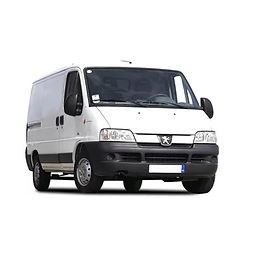
PEUGEOT BOXER
1994 - 2006


ONLINE INQUIRY
If you are not sure which of the many Peugeot Boxer leaf springs fits your vehicle, please submit your inquiry online and we will email you a quotation. If you find our quotation suitable, your product is just a click away.


Peugeot Boxer leaf spring: professional maintenance and technical information
The Peugeot Boxer forms one-third of the highly successful European light commercial vehicle partnership alongside Citroen Jumper and Fiat Ducato, collectively dominating the 3.0-3.5 tonne van segment across the continent. This collaborative development strategy delivers proven engineering to Peugeot's commercial customers through an extensive dealer network particularly strong in French-speaking markets and Southern Europe. Leaf spring suspension architecture underpins the Boxer's reputation for reliability in demanding commercial applications—from refrigerated delivery operations to mobile workshop conversions. For businesses depending on Boxer fleet availability, leaf spring condition represents a critical maintenance priority directly affecting payload capability, vehicle handling safety, and operational continuity across the varied duty cycles these hardworking vans encounter throughout their service lives.
How Peugeot Boxer leaf springs support axle control and load management
Your Boxer's rear axle connection to the chassis relies entirely on leaf spring assemblies—no backup linkage exists to maintain axle positioning if leaf springs fail or weaken significantly. This singular dependence makes leaf spring integrity absolutely critical for safe vehicle operation under all loading conditions. Beyond merely connecting components, leaf springs must actively control axle position throughout the complete range of operational forces: longitudinal loads during acceleration and braking, lateral forces during cornering and crosswinds, vertical impacts from road irregularities and payload shifts. Precise dimensional matching between left and right leaf springs ensures parallel axle geometry essential for predictable handling—when leaf spring arc heights differ even minimally between sides, the resulting axle angle produces uneven tire contact patterns, accelerated wear, and steering pull requiring constant correction. The suspension system surrounding these foundational leaf springs includes shock absorbers limiting oscillation frequency, bump stops preventing metal-to-metal contact during maximum compression, and stabilizer bars (fitted to certain Boxer configurations) reducing body roll during cornering. Each component contributes to overall ride and handling characteristics, but leaf spring structural integrity remains the non-negotiable foundation determining whether your Peugeot Boxer maintains safe, controlled behavior across commercial vehicle operating conditions.
Root causes behind Peugeot Boxer leaf spring failures
Determining why specific Boxer leaf springs failed requires understanding multiple independent failure pathways producing superficially identical fractured components. Impact damage from road hazards—stones, potholes, debris at construction sites—creates surface imperfections that become crack initiation sites slowly propagating over subsequent months of operation. Modern steel production maintains extremely high purity standards, yet microscopic non-metallic inclusions inevitably remain embedded within material; these particles create internal stress concentration points where cracks eventually initiate as leaf springs accumulate load cycles. Thermal processing during leaf spring manufacture follows exacting protocols: heating components to 850-950°C enables molecular restructuring, rapid oil-bath quenching to 45-55°C locks in desired properties, tempering at 400-500°C reduces brittleness, gradual cooling to ambient temperature completes the transformation. Deviations at any stage—incorrect temperatures, improper timing, inadequate quenching rates—produce leaf springs exhibiting either catastrophic brittleness or insufficient strength retention. The 51CrV4 steel alloy typically specified for parabolic Boxer leaf springs contains 0.51% carbon, 1.1% chromium, and 0.2% vanadium providing superior fatigue resistance, while multi-leaf configurations often employ 55Cr3 steel with 0.51% carbon, 0.7% chromium, and 0.7% manganese offering adequate performance at reduced cost. Corrosive exposure from road salt and moisture penetrates steel grain boundaries over multiple seasons, progressively degrading material strength until operational loads exceed remaining capacity. U-bolt installation errors where fasteners receive insufficient torque—typically requiring 130-200 Nm depending on thread size—permit leaf spring movement within mounts, creating friction wear gradually enlarging center holes until fracture occurs. Systematic overloading consumes available fatigue life with each trip exceeding rated capacity, advancing leaf springs toward eventual failure. Demanding service environments—rough industrial access roads, frequent maximum-payload operation, stop-start urban delivery cycles—subject Boxer leaf springs to duty exceeding original design assumptions in your Peugeot Boxer operations.
Why welding repairs fail on Boxer leaf springs
Attempting welding repairs on fractured Boxer leaf springs appears economically attractive initially but creates technically unsound and potentially dangerous situations. The fundamental challenge involves leaf spring steel's carefully engineered metallurgical properties—the specific balance between hardness and flexibility enabling millions of load cycles becomes irreparably compromised by welding's intense localized heating. Heat-affected zones surrounding weld beads undergo uncontrolled phase transformations, creating regions exhibiting dramatically different mechanical properties than properly heat-treated base material. These altered zones typically become more brittle while losing the carefully balanced flexibility essential for repeated loading cycles. Stress concentration at boundaries between welded and unwelded material initiates new crack formation shortly after repaired leaf springs return to service. Welded repairs on Boxer leaf springs rarely survive beyond several weeks before re-fracturing—sometimes directly at weld locations, sometimes adjacent where altered properties cannot withstand operational stresses. Professional leaf spring manufacturing achieves uniform material properties throughout components via controlled steel composition, precision forming processes, and carefully monitored thermal treatments. Field welding repairs lack these production controls, inevitably producing joints weaker than surrounding material regardless of welder skill levels. Beyond technical inadequacy, welded leaf spring repairs create serious safety risks: unexpected fracture during Peugeot Boxer operation can cause sudden axle displacement, potentially resulting in loss of directional control with minimal driver warning.
Assessing risk when Boxer leaf springs show damage
Deciding whether damaged Boxer leaf springs permit continued operation demands systematic evaluation across six critical factors. Primary consideration involves fracture location: main leaf breaks between axle mounting and forward attachment points create immediate safety hazards requiring urgent replacement, while rear-section fractures present substantially reduced risk permitting temporary operation under careful conditions. Leaf spring type significantly influences failure consequences—parabolic single-leaf designs concentrate entire suspension capacity in one component where failure eliminates all support, versus multi-leaf assemblies where intact secondary leaves provide partial capacity after main leaf fracture. Within multi-leaf configurations, identifying which specific leaf failed determines urgency levels: main leaf damage demands immediate attention, secondary leaf fractures allow limited continued operation, tertiary leaf damage permits extended use under reduced loading. Current vehicle loading dramatically affects acceptable risk: empty Boxer vans tolerate damaged leaf springs far better than vehicles approaching 3,500 kg gross weight limits. Stabilizer bar equipment provides supplementary axle positioning partially offsetting leaf spring compromise on configurations including these components. Operational context influences risk acceptance thresholds: local delivery routes with frequent stops present different consequence profiles than sustained high-speed motorway operation. Maximum danger emerges when main leaf springs fracture forward of axles on Boxer vehicles lacking stabilizer bars while carrying substantial payloads—this combination risks abrupt axle displacement potentially causing complete vehicle control loss. Prudent risk management dictates minimizing further operation under high-risk scenarios, proceeding only at significantly reduced speeds directly to service facilities for immediate Peugeot Boxer leaf spring replacement.
Boxer leaf spring problems not involving fracture
Peugeot Boxer leaf springs develop numerous performance-degrading conditions without experiencing complete fracture. Progressive weakening manifests as gradually increasing rear suspension sag under typical payload levels—this deterioration indicates leaf springs approaching service life limits despite lacking visible cracks or breaks. Standard commercial vehicle operation systematically reduces leaf spring load capacity throughout 5-10 year service intervals as accumulated flexing cycles consume available material fatigue resistance. Eventually, leaf springs cannot maintain designed arc configurations, causing suspension ride height to decrease progressively. Specific Boxer applications involving permanently installed equipment—tail lifts, refrigeration compressors, extensive shelving systems, water tanks—frequently exceed factory leaf spring capacity ratings from initial service. These severe-duty uses can expose leaf spring inadequacy within initial months rather than years. Manufacturing defects occasionally produce leaf springs exhibiting premature strength loss from improper heat treatment execution, losing designed load capacity early in service despite appropriate usage patterns. Reputable leaf spring manufacturers generally honor warranty coverage for these production failures. Audible suspension complaints—squeaking, groaning noises during articulation—typically indicate worn plastic interlayer pads in multi-leaf assemblies or degraded rubber bushings at leaf spring mounting locations; while these noises rarely signal imminent fracture, they do suggest accelerated wear patterns deserving professional inspection. Factory leaf spring specifications optimized for maximum payload ratings inevitably compromise unladen ride comfort, producing harsh characteristics when Boxer vehicles operate empty or lightly loaded—this represents unavoidable trade-offs in commercial vehicle suspension engineering affecting your Peugeot Boxer comfort levels.
Upgrading Boxer suspension for enhanced capability
Leaf spring reinforcing kits increase Peugeot Boxer payload capacity through adding supplementary leaves beneath existing assemblies—especially valuable for vehicles consistently operating near or exceeding original weight ratings. Complete reinforcing systems include extended U-bolts accommodating thicker leaf spring packs, longer center bolts, and necessary mounting hardware; correct installation demands careful attention to leaf spring alignment and precise fastener torque application. Progressive auxiliary spring systems provide alternative enhancement through hollow rubber components engaging exclusively under substantial loading. These helper systems remain inactive during light-load operation preserving ride comfort, activating to provide additional support when Boxer vehicles carry significant payloads. Premium air suspension installations offer continuously variable support adjustment through integrated compressor systems with driver-controlled cab interfaces. Air suspension capability proves particularly beneficial for Boxer applications involving highly variable loading patterns, loading dock height adjustment requirements, or operations alternating between cargo and passenger configurations. Certain operators install softer primary leaf springs paired with auxiliary air systems, substantially improving unladen ride quality while maintaining or enhancing loaded performance. All suspension enhancement components we supply satisfy European Union regulatory standards, ensuring legal operation throughout EU member states while preserving vehicle type approval status for your modified Peugeot Boxer.
Selecting correct leaf springs for your Boxer configuration
Commence Boxer leaf spring identification by examining existing components for OEM article numbers—manufacturers typically stamp these numbers into leaf spring surfaces, paint them on components, or display them on adhesive identification labels. Article number entry in our online catalog delivers definitive fitment confirmation eliminating specification uncertainty. When article numbers prove illegible through corrosion, paint deterioration, or physical damage, submit production year and VIN data through our inquiry system enabling manufacturer database lookup. Numerous straightforward Boxer leaf spring orders require only production year and leaf count information, though complex configurations occasionally necessitate supplementary verification details. Physical dimension measurements—overall length, material thickness, width dimensions, center hole diameter, arc radius—enable approximate specification matching, though measurements alone cannot guarantee absolute fitment certainty given manufacturing tolerances and design variations across Boxer model years. Photograph submission assists identifying non-standard leaf spring installations on used Boxer vehicles where previous modification history remains unknown or undocumented. Multi-leaf spring assemblies permit economical repairs through individual leaf purchases when only single components within packs require replacement. Paired leaf spring purchases aren't mandatory—approximately 70% of our customers successfully order individual leaf springs—though specific circumstances favor paired replacement: aged Boxer vehicles where non-fractured leaf springs demonstrate weakness, extended operation following initial failure creating elevated stress in opposite assemblies, or fleet maintenance protocols prioritizing operational availability over immediate component expenses in your Peugeot Boxer servicing program.
DIY leaf spring replacement on Peugeot Boxer vehicles
Competent home mechanics possessing appropriate equipment can successfully accomplish Boxer leaf spring replacement tasks. Required equipment inventory includes commercial-grade lifting apparatus (hydraulic floor jacks and safety stands rated for vehicle weight), calibrated torque wrenches, extensive socket assortments including deep-reach designs for U-bolt accessibility, penetrating lubricants for aged corroded fasteners, and suitable personal protective equipment. Elevate Boxer vehicles on firm, level surfaces and completely unload rear suspensions before removing leaf spring mounting hardware. Fastener torque specifications depend on U-bolt thread dimensions: M12 sizes require 130 Nm tightening, M14 demand 200 Nm, M16 need 315 Nm application. Reduce these specification values 10-15% when applying anti-seize products or encountering pre-lubricated threads. Retorquing procedures after 1,000-5,000 km operation prove essential as replacement leaf springs settle and mounting components achieve proper seating. Video instruction materials demonstrating Boxer-specific leaf spring replacement appear throughout our technical blog sections. Despite relatively straightforward procedures, numerous Boxer operators select professional installation services—corroded fasteners typical on aged commercial vehicles, restricted underbody workspace on certain body configurations, and business efficiency calculations frequently justify professional service investment over DIY time commitment for your Peugeot Boxer maintenance activities.
Why choose our Peugeot Boxer leaf springs
Manufacturing-direct sales channels eliminate wholesale distributor margins, delivering Peugeot Boxer operators superior value without quality compromise. Our leaf spring specifications duplicate original equipment standards completely—exact dimensional matching, identical spring rate characteristics, equivalent durability expectations, matching corrosion protection treatments guarantee trouble-free replacement integration. Single leaf availability within multi-leaf assemblies enables economical repairs replacing only damaged components rather than complete assemblies when individual leaves fracture.
Protection coverage surpasses industry standards through layered warranty structure: the mandatory 2-year European Union statutory guarantee enhanced by our exclusive 2-year manufacturing warranty extension, producing unmatched 4-year total protection demonstrating unwavering production quality confidence. Inventory breadth encompasses both high-volume Peugeot Boxer specifications and infrequently-requested configurations, with comprehensive suspension service capability supported through immediate component availability—leaf spring bushings, U-bolt fastener sets, mounting bracket assemblies.
Our dedicated online commerce platform provides ordering sophistication conventional automotive parts channels cannot replicate—transparent specification access, intuitive selection workflows, comprehensive technical documentation availability. Component offerings extend well beyond basic replacement leaf springs to encompass reinforcing systems and auxiliary suspension enhancements, supported by application-specific technical consultation addressing your particular Peugeot Boxer loading scenarios. Protected shipping protocols—reinforced corrugated packaging for items below 80kg weight, secure pallet configurations for heavier leaf spring assemblies—ensure damage-free continental delivery from strategically located distribution centers minimizing transit intervals.
Commercial fleet operations, independent repair facilities, and professional service organizations access volume-sensitive pricing frameworks acknowledging purchasing commitment levels. Technical capability originates from concentrated specialization—over 25 years devoted exclusively to leaf spring engineering establishes us as legitimate specialists in commercial vehicle suspension technology serving your Peugeot Boxer requirements.