


LEAF SPRINGS
HYUNDAI H1
Leaf springs for Hyundai H1 from 130 EUR • Popular articles always in stock, ready to ship.
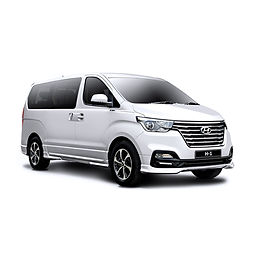
HYUNDAI H1
2007 ➞


AUXILIARY SPRING KIT

AIR SPRING SYSTEM
HYUNDAI H1
2000 - 2007

AUXILIARY SPRING KIT


Hyundai H1 leaf spring: comprehensive technical reference
Multi-purpose vehicles like the Hyundai H1 bridge the gap between passenger comfort and commercial utility throughout European markets. Originally introduced as a versatile people mover, the H1 now serves diverse roles from airport shuttle operations to commercial delivery services. Suspension performance becomes particularly critical when vehicles alternate between passenger transport and cargo hauling—proper leaf spring maintenance ensures safety regardless of loading configuration. Your H1's operational reliability across these varied applications depends directly on understanding suspension technology and recognizing when component replacement becomes necessary.
How leaf springs anchor and stabilize your Hyundai H1
The connection between your H1's rear axle and chassis exists entirely through leaf spring assemblies—no alternative mechanical linkage supports this critical junction. This structural role means spring failure immediately compromises axle positioning, creating dangerous driving conditions where the axle can shift laterally during cornering or longitudinally during braking. Beyond simply connecting components, these springs must maintain precise axle alignment throughout the vehicle's operational life. Left and right springs with mismatched dimensions—even slight differences in arc height or length—create axle angles that accelerate tire wear and introduce unpredictable steering behavior. The suspension system surrounding these springs includes shock absorbers for damping, bump stops for overload protection, and optional stabilizer bars on certain H1 configurations. All these components work interdependently, but the leaf spring remains the foundational element that determines whether your Hyundai H1 maintains stable, predictable handling characteristics under variable loading conditions.
Manufacturing specifications for Hyundai H1 spring steel
Modern H1 leaf springs employ either 51CrV4 or 55Cr3 steel alloys depending on spring design and loading requirements. The 51CrV4 composition—0.51% carbon, 1.1% chromium, 0.2% vanadium—appears predominantly in parabolic single-leaf designs where superior fatigue resistance justifies the material cost. Multi-leaf configurations more frequently utilize 55Cr3 steel containing 0.51% carbon, 0.7% chromium, and 0.7% manganese, offering adequate performance at reduced material expense for applications where multiple leaves distribute stress. Heat treatment procedures critically influence final spring performance regardless of base alloy selection. Manufacturers slowly raise spring steel temperature to 850-950°C, then rapidly quench components in oil baths cooled to 45-55°C before tempering at 400-500°C and gradually returning to ambient temperature. This thermal cycle transforms steel molecular structure, creating the specific balance between hardness and flexibility that allows springs to repeatedly flex under load without permanent deformation or catastrophic fracture. Improper execution of any heat treatment phase—insufficient quenching speed, incorrect tempering temperature, or rushed cooling—produces springs that either crack unexpectedly or sag prematurely in your Hyundai H1 suspension.
Multiple pathways lead to leaf spring failure in H1 applications
Diagnosing why particular H1 leaf springs failed requires understanding that multiple distinct mechanisms produce superficially similar breakage patterns. Surface micro-cracks propagate slowly from initial damage points—perhaps where road debris struck the spring or where manufacturing left microscopic surface imperfections. These cracks remain invisible during routine inspection until sudden fracture occurs after months of incremental growth. Non-metallic inclusions represent a different failure mode where foreign compounds embedded during steel production create internal weak points. Steel manufacturers cannot economically eliminate all inclusions, but excessive inclusion size or proximity to spring surfaces dramatically reduces component life. Corrosion presents yet another distinct mechanism, beginning at surface exposure points and spreading through the steel matrix along grain boundaries. U-bolt torque specifications exist specifically to prevent movement-induced wear at spring center holes—insufficient tightening allows springs to shift during operation, enlarging mounting holes until fracture occurs. Overloading represents perhaps the most common accelerating factor, particularly in H1 vehicles frequently loaded near maximum capacity with passengers and luggage. Each additional load cycle above design limits consumes a portion of the spring's fatigue life, eventually exhausting the material's capacity to flex without cracking. Surface decarburization from improper repair attempts weakens outer steel layers where maximum stress concentration occurs. Vehicle manufacturers occasionally specify springs inadequate for real-world loading patterns, optimizing for reduced weight and material cost rather than maximizing service life in your Hyundai H1.
Welding attempts provide only temporary, dangerous fixes
Leaf spring steel's metallurgical properties that enable repeated flexing under load also make successful welding repairs virtually impossible. The intense localized heating during welding fundamentally alters steel structure in zones surrounding the weld joint. This heat-affected area develops different mechanical properties than the original spring steel—typically becoming more brittle while losing the carefully engineered balance between hardness and flexibility. Welded joints create stress concentration points that rapidly initiate new cracks once the repaired spring returns to service. Operators attempting welding repairs typically observe re-fracture within several weeks, often at the weld location but sometimes adjacent to the repair where stress concentration exceeds local material capacity. Professional spring manufacturers universally recommend complete replacement rather than repair attempts. The apparent short-term cost savings from welding quickly disappear when considering re-fracture risks, potential vehicle damage from sudden failure, and safety hazards if axle displacement occurs during operation. Replacement springs from reputable manufacturers include proper heat treatment and quality control absent from field repair attempts on your Hyundai H1.
Leaf spring problems beyond complete fracture
Weakened springs sagging under load represent the most frequent non-fracture issue affecting H1 suspensions. This gradual strength loss occurs naturally as springs accumulate millions of flexing cycles over 5-10 year service lives. Visible rear sag when loading passengers or cargo indicates approaching replacement intervals. Some H1 applications—particularly vehicles with permanent equipment installations or operating consistently at maximum passenger capacity—exceed factory spring capacity from the outset. Original springs may prove inadequate within months rather than years for these demanding applications. Heat treatment defects occasionally produce springs that soften prematurely, losing designed arc height within the first season of operation. Reputable manufacturers typically honor warranty claims for these production failures. Squeaking noises during suspension movement usually indicate worn interlayer pads in multi-leaf assemblies or degraded bushings at spring mounting points. While annoying, squeaks rarely indicate imminent failure—though they do suggest accelerated component wear deserving investigation. Factory spring rates optimized for load capacity often produce harsh ride quality when operating with minimal passenger loads. This trade-off between load capacity and comfort proves particularly noticeable in H1 vehicles alternating between full passenger configuration and light cargo duties. Various upgrade solutions address these comfort concerns while maintaining or enhancing load capacity for your Hyundai H1 operations.
Upgrade options for enhanced H1 suspension performance
Reinforcing kits increase spring capacity by adding supplementary leaves beneath existing spring packs, particularly valuable for H1 vehicles consistently operating near or above original payload ratings. Complete kit contents include longer U-bolts accommodating increased spring pack thickness, extended center bolts, and all necessary mounting hardware. Installation requires professional expertise to ensure proper spring alignment and correct fastener torque. Auxiliary spring systems offer alternative approaches using hollow rubber springs positioned to engage only when suspension compresses under substantial loading. These progressive-rate helpers maintain comfortable ride characteristics with light loads while providing additional support when needed. Air spring systems represent the premium suspension enhancement, mounting alongside factory leaf springs and offering continuously variable support adjustment through cab-mounted controls. Integrated compressors enable real-time ride height adjustment—particularly valuable for H1 vehicles encountering steep ramps, rough terrain, or highly variable loading patterns. All suspension upgrades we supply carry full European Union certification, ensuring legal operation throughout EU member states while maintaining compliance with vehicle registration requirements applicable to modified commercial vehicles in your Hyundai H1's operating region.
Identifying and ordering appropriate H1 leaf springs
Four distinct identification approaches enable accurate leaf spring selection for your specific H1 configuration. OEM article numbers stamped, painted, or labeled on existing springs provide definitive identification when entered in our online catalog—this method guarantees correct fitment with 100% certainty. Alternatively, submitting production year and VIN through our inquiry system allows database cross-referencing to identify proper specifications. Many straightforward orders require only production year and leaf count, though we occasionally request supplementary details for verification. Physical measurements—length, thickness, width, center hole diameter, and arc curvature—offer another identification pathway, though measurements alone cannot guarantee perfect fitment given manufacturing tolerances and design variations across model years. Photographs of existing springs help identify non-standard installations on used H1 vehicles with uncertain modification history. Individual spring leaf purchases provide economical solutions for multi-leaf assemblies where only one leaf fractured. Paired spring replacement isn't mandatory—70% of our customers successfully purchase individual springs—though pairs make sense for aged vehicles where the surviving spring shows weakness, following extended operation after initial spring failure, or for fleet operators prioritizing reduced service interruption over immediate parts cost in your
Hyundai H1 operations.
Self-installation versus professional leaf spring replacement
Mechanically competent H1 owners can successfully replace leaf springs given proper tools and safety equipment. Required equipment includes heavy-duty floor jacks and axle stands rated for vehicle weight, quality torque wrenches, comprehensive socket sets with deep sockets for U-bolt access, penetrating lubricant for corroded fasteners, and appropriate personal protective equipment. Vehicles must be lifted and secured on level surfaces with suspension fully unloaded before removing mounting hardware. U-bolt installation demands specific torque values—M12 bolts require 130 Nm, M14 bolts need 200 Nm, M16 bolts demand 315 Nm. These specifications assume clean, dry threads; reduce torque 10-15% for lubricated fasteners. Retightening after 1,000-5,000 km becomes essential as new springs settle into service. Our technical blog hosts video tutorials demonstrating complete replacement procedures specific to H1 models. Many operators prefer professional installation despite straightforward procedures—corroded fasteners, limited workspace access, or operational efficiency often justify professional service costs over DIY time investment for your Hyundai H1 maintenance.
Why choose our Hyundai H1 leaf springs
Purchasing directly from our manufacturing facility eliminates distributor markups, delivering exceptional value without compromising quality. Our Hyundai H1 springs match original equipment specifications across all critical parameters—dimensions, spring characteristics, operational lifespan, and surface treatment—ensuring seamless replacement performance. For multi-leaf assemblies, individual spring leaves are available separately, eliminating the need to replace complete assemblies when only one leaf has failed.
We demonstrate our manufacturing confidence through industry-leading warranty coverage: the mandatory 2-year EU statutory guarantee plus an exclusive additional 2-year manufacturer's warranty, providing unique 4-year total protection unmatched in the European market. Our comprehensive inventory includes not only high-demand configurations but also rare Hyundai H1 specifications, with associated components—bushings, U-bolts, and spring brackets—readily available for complete suspension service.
Our specialized webshop represents a unique European resource, offering unprecedented ordering transparency and simplicity that conventional parts suppliers cannot match. Beyond standard replacement springs, we supply reinforcing kits and auxiliary spring systems with expert selection guidance tailored to your specific loading requirements. All springs ship protected—units under 80kg in reinforced boxes, heavier assemblies on pallets—ensuring damage-free delivery throughout
Europe from our strategically located distribution warehouses that minimize transit times.
Commercial customers, workshops, and fleet operators benefit from customized trade conditions reflecting volume requirements. Our expertise stems from genuine passion—over 25 years dedicated exclusively to leaf spring technology, making us true specialists in commercial vehicle suspension solutions for your Hyundai H1 operations.